
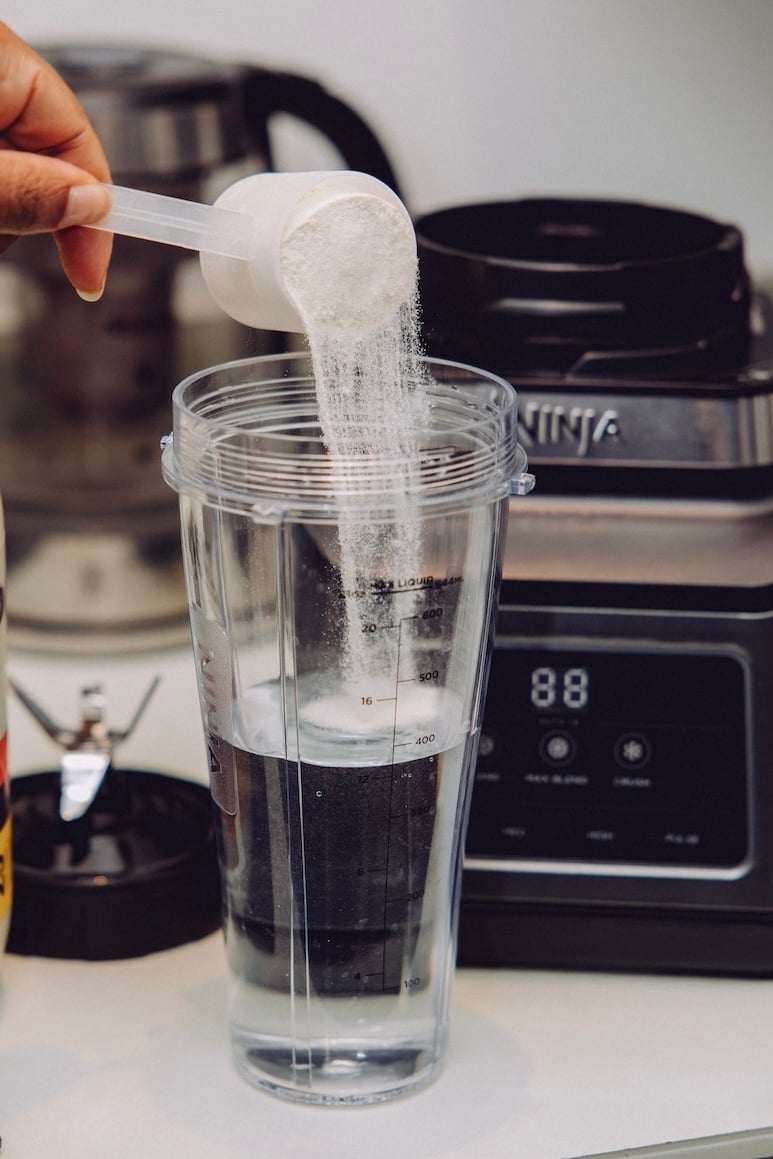
In recent years, collagen supplements have become a top-selling supplement, in many different forms; powders, liquid sachets, peptides, creams. But what are the actual collagen protein benefits — and do they live up to the hype?
Collagen protein and collagen protein benefits have become one of the most talked-about topics in the supplement world in recent years. From skin health to joint pain to muscle mass support, collagen supplements are now a top-selling supplement across the UK and globally.
But here’s the key question: what does collagen actually do in the human body — and should you take it?
Collagen is the most abundant protein in the body, making up roughly one-third of the protein content in our connective tissue, skin, bones and blood vessels. It plays an important role in maintaining joint health, supporting skin elasticity, contributing to bone strength and forming part of the extracellular matrix that quite literally holds everything together.
But the reality is that as we move through the aging process, collagen levels naturally decline. We produce less collagen, and the collagen fibres we do have become weaker. That’s when we start noticing signs of aging like loss of elasticity, joint stiffness, slower wound healing and changes in skin hydration.
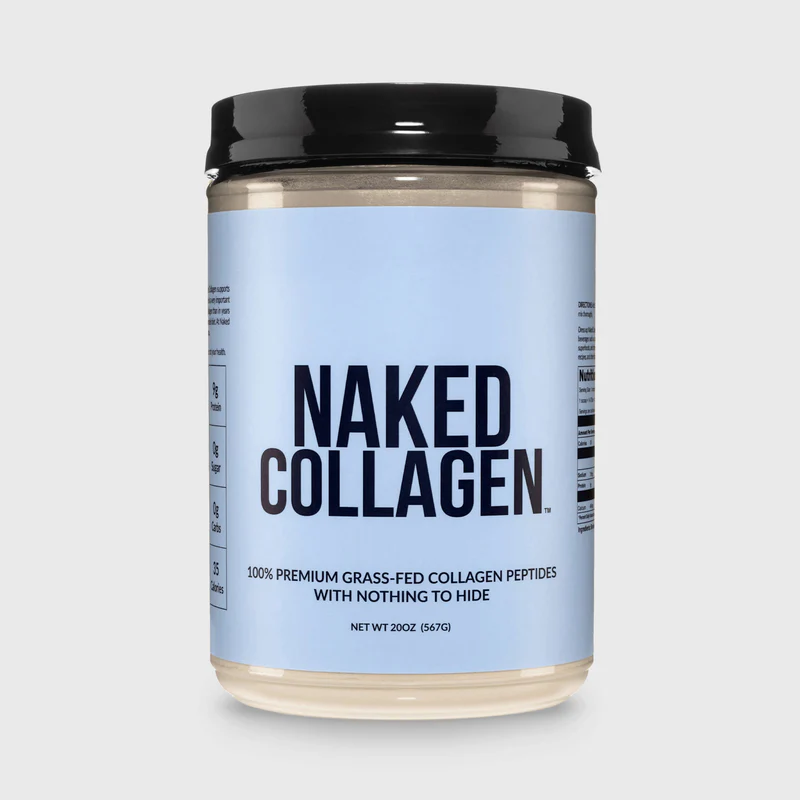
The collagen protein I’ve been using most recently and reviewing is Naked Collagen Peptides from Naked Nutrition — and in this post, I’ll break down the science, the potential health benefits of collagen, and how I personally use it in my daily routine.

About Naked Nutrition
Naked Nutrition produces protein powders and supplements using the purest raw ingredients — without added sugar, artificial flavours or colours.
The brand has been established in the USA for over a decade and has recently launched in the UK and EU. Their approach is simple: minimal ingredients, full transparency, and no unnecessary extras.
If you’re someone who prefers supplements without fillers or marketing fluff, that’s relevant.
What Is Collagen Protein?
Collagen is a structural protein that forms the building blocks of protein within connective tissue. It’s the major component of bones, tendons, ligaments and skin.
There are different types of collagen, but the main collagen types you’ll hear about are:
• Type I – skin, bones, tendons
• Type II – cartilage and joint health
• Type III – skin and blood vessels
Most collagen protein powder products use collagen hydrolysates (also called collagen peptides). This means the collagen has been broken down into smaller amino acids so the digestive system can absorb it more easily.
Unlike whey protein, collagen is not a complete protein. It doesn’t contain all essential amino acids required for muscle protein synthesis. So it shouldn’t replace other protein sources in a balanced diet — but it definitely can complement them.
Collagen Protein Benefits
Let’s talk about the actual health benefits of collagen and where the evidence currently sits.
1. Collagen for Joint Health and Joint Pain
Collagen plays an important role in connective tissue and cartilage. Because cartilage cushions joints, declining collagen levels can contribute to joint pain and stiffness — particularly in people doing regular physical activity.
Some research suggests that oral collagen supplements may support joint health and reduce discomfort in active individuals. It’s not magic. But for runners, cyclists and strength trainers putting repeated stress through joints, supporting connective tissue makes sense.
My biggest success with collagen was helping me recover from a shoulder injury which I’d carried for one whole year. A friend asked if I’d tried collagen and I actually had a stash that I hadn’t tried or used.
And whilst it isn’t magic, it certainly felt like magic. A few days after starting daily supplementation, my joint pain eased allowing me to use and strength the shoulder! I’ve been free of that injury for around 2 years so far and remain a fan of collagen supplements to this day.
2. Collagen and Muscle Mass
As previously mention, collagen isn’t a complete protein like whey protein, but it still contributes amino acids that support muscle growth.
While it won’t maximise muscle protein synthesis on its own, combining collagen protein with resistance training may help support muscle mass — especially in postmenopausal women, where preserving lean tissue becomes increasingly important.
3. Collagen for Skin Elasticity and Skin Health
Collagen fibres are responsible for skin elasticity and structure. As collagen production drops with age, skin aging accelerates — loss of elasticity, fine lines, reduced skin hydration.
Some studies show that daily consumption of collagen peptides may improve skin elasticity and hydration over time. UV rays and ultraviolet light accelerate collagen breakdown, so lifestyle factors absolutely matter here too.
I’m a huge advocate for wearing sunscreen, every day, no matter the season. Check out this list of recommended sunscreens for cyclists and runners.
So, this isn’t about chasing youth. It’s about supporting skin health as part of a healthy diet.
4. Collagen for Bone Strength and Bone Health
Collagen forms a major component of bones, giving them flexibility and resilience. As collagen levels decrease, bone strength can be affected.
Some evidence suggests collagen supplementation may support bone health, particularly in postmenopausal women who are at greater risk of bone density decline.
5. Collagen and the Digestive System
Collagen contains specific amino acids that may support the digestive tract and gastrointestinal tract lining. While claims around “leaky gut” are often exaggerated online, collagen does play a role in the structural integrity of connective tissues throughout the digestive system.
Again — supportive, not a cure-all.
Why Collagen Production Declines
The body’s collagen production naturally decreases with age. Add lifestyle factors like poor nutrition, smoking, excess ultraviolet light exposure and high stress, and the decline accelerates.
After 40 — and particularly in postmenopausal women — we simply produce less collagen.
The good news? Collagen synthesis also depends on vitamin C, which you can support through citrus fruits, leafy greens and a healthy diet rich in whole grains and collagen-rich foods like bone broth and egg whites.
Supplements should not a replacement for healthy eating — they’re an addition.
Collagen vs Whey Protein
This was one of the first questions I had when I started to consider supplementing with collagen.
Basically, whey protein is a complete protein containing all essential amino acids required for muscle protein synthesis. Collagen protein powder is not a complete protein.
If your goal is maximising muscle growth, whey protein is superior. If your goal is supporting connective tissue, joint health, skin elasticity and bone health alongside your training, collagen products may have beneficial effects.
They serve different purposes but the bonus is you can use them both together to create the ultimate, nutrition-packed protein shake to support muscle recovery and overall health.
Are There Side Effects of Collagen?
Collagen is generally well tolerated. Reported side effects are mild and uncommon, often digestive in nature.
The bigger consideration is product quality. As with many dietary supplements, heavy metals can be a concern if sourcing isn’t transparent.
Always look for third-party testing and clean ingredient lists.
Naked Collagen (Collagen Peptides Protein) Review
When I look at collagen products, I’m not interested in hype. I’m looking at ingredient quality, sourcing and practicality. The product I’ve been using is Naked Collagen from Naked Nutrition which is a grass-fed collagen peptides powder.
This collagen protein powder contains:
- Grass-fed bovine collagen peptides
- No flavouring
- No sweeteners
- No fillers
It’s in powder form and dissolves easily in hot drinks (more on that in a below). No strange texture. No overpowering taste. That matters — because if something doesn’t fit into your daily routine, you won’t stick with daily consumption of collagen peptides.
From a formulation perspective, it’s collagen hydrolysates — meaning the collagen has been broken down into smaller amino acids to support absorption through the digestive system.
I’ve been using it as part of my daily routine — not expecting miracles, but focusing on consistency. I train regularly, so supporting joint health and connective tissue matters to me. Oh, and I’m getting married in a few months so looking after my skin is a big priority for me at the moment.
Have I noticed dramatic changes? No overnight glow-up nonsense. But I do feel it complements my overall protein intake and recovery strategy. For me, it fits into a broader healthy diet and lifestyle that already prioritises resistance training, physical activity and whole foods.
My 5min Collagen Hot Chocolate Recipe
This hot chocolate recipe is how I use my collagen protein powder most consistently.
- 1 scoop Naked Collagen (Each serving includes 9 grams of protein and only 35 calories)
- 25g of 70% Dark Chocolate
- 220ml oat milk
Method
- Add your milk to a cup and heat up. I pop it in the microwave for 2 minutes and 20 seconds.
- While the milk is heating, crush your chocolate. I usually put in in some baking paper and use a rolling pin to break it up
- When the milk is done, add the chocolate and collagen powder
- Use a milk frother to mix until the chocolate is. fully dissolved and the drink is smooth
A couple other tweaks I’ve tried and loved are using mint flavoured chocolate, adding a dash of cinnamon powder or adding a dash of cayenne powder for that mexican hot chocolate vibe.
For me, this recipe turns collagen supplementation into something enjoyable rather than another chore in the supplement stack. I often drink this about an hour before bed.
So — are collagen protein benefits real?
Yes. But they’re contextual.
Collagen plays an important role in connective tissue, joint health, skin elasticity, bone health and muscle mass support. It contributes to the structural integrity of the human body, supports collagen synthesis and forms the building blocks of protein in the extracellular matrix.
But collagen supplements are not a secret anti-aging shortcut.
They work best when paired with:
• A balanced diet rich in vitamin C (think citrus fruits and leafy greens)
• Enough total protein intake
• Resistance training to stimulate muscle protein synthesis
• Smart recovery
• A healthy lifestyle that protects against excessive UV rays and stress
For active women — particularly over 40 and postmenopausal women — supporting collagen levels may be a sensible addition to an already strong foundation of healthy eating and physical activity.
For me, Naked Collagen fits into that foundation. It’s simple, clean, easy to use, and free from unnecessary ingredients. No dramatic promises. Just a straightforward collagen protein powder that complements my overall training and recovery approach.
If you’re considering collagen supplements, focus less on hype and more on consistency, ingredient quality and how it fits into your daily routine.
That’s where the real beneficial effects of collagen supplementation are most likely to show up.
Have you ever tried supplementing with collagen?
Elle