

If there’s one training principle that quietly underpins real progress in strength training, resistance training, and muscle development, it’s progressive overload.
In simple terms, progressive overload means gradually increasing the stress you place on your body over time. That stress can come from heavier weights, more repetitions, longer periods under tension, shorter rest periods, or changes to overall training volume.
The goal is to keep giving your muscles and nervous system a new challenge so they have a reason to adapt.
Without progressive overload, workouts quickly become maintenance. You might feel busy, sweaty, and tired, but muscle growth, greater strength, and real progress eventually stall.
This is one of the most common reasons people hit training plateaus, even when they’re consistent in the weight room.
Consistency matters. But consistency with progression is what actually drives change.
Progressive Overload Meaning (Without the Jargon)
Progressive overload training is a training method based on gradual increases in a training stimulus.
That stimulus might be:
• the amount of weight lifted
• the total number of reps or sets
• the number of repetitions within a rep range
• rest time between sets
• workout frequency
• intensity of your workout
• overall training volume
Each small increase creates additional tension in the muscle fibres, which triggers muscle gains through mechanical tension, metabolic stress, and a small amount of muscle damage. Over time, this leads to increases in muscle mass, muscle size, muscular endurance, and overall strength.
The key word is gradual. Progressive overloading is not about doing much weight for the sake of it. It’s about manageable changes applied consistently over the long run.
Does Progressive Overload Build Muscle?
Yes; progressive overload is one of the most effective ways to build muscle.
Muscle growth happens when your body is exposed to a training stimulus that is slightly greater than what it’s already adapted to. If the stimulus never changes, your neuromuscular system has no reason to respond.
When it increases gradually, your body adapts by building larger muscles, increasing muscle mass, and improving coordination between muscles and the nervous system.
This applies whether your goal is muscle gains, greater strength, improved muscular endurance, or simply feeling stronger and more capable in daily life.
Different Ways to Progressive Overload (It’s Not Just Heavier Weights)
A common mistake is thinking progressive overload only means lifting heavy weights. That’s just one form of progression.
Some of the best ways to apply progressive overload include:
• increasing the amount of weight lifted
• adding extra reps within the same rep range
• increasing total volume (sets × reps × weight)
• reducing rest time or using shorter rest periods
• improving range of motion and control
• slowing tempo to increase time under tension
• increasing workout frequency for a muscle group
• introducing new exercises or variations
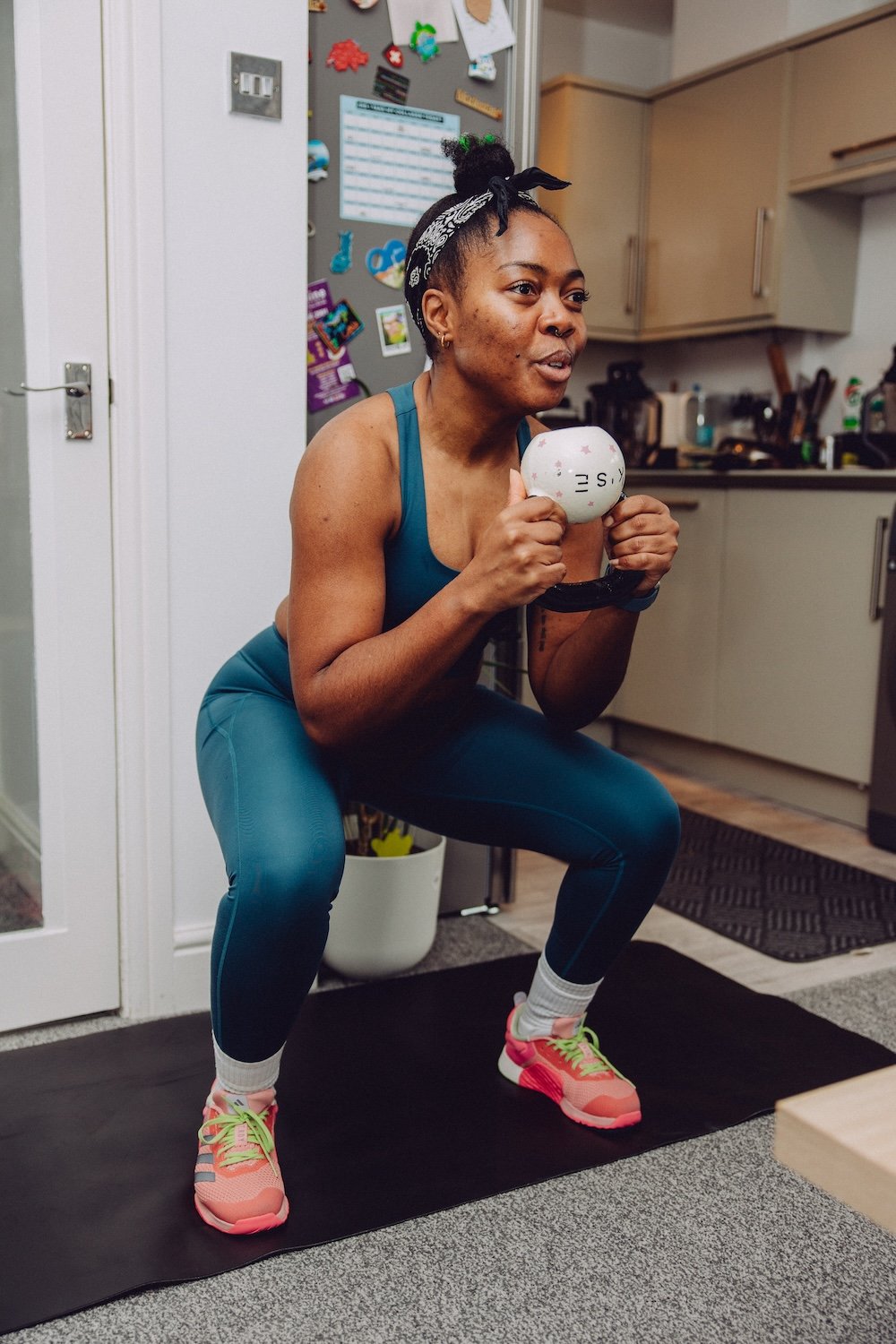
For example, progressing from bodyweight squats to goblet squats, then to a back squat, is a form of progressive overload. So is moving from lighter weight bicep curls to heavier weights while maintaining good form.
Progress does not need to be dramatic to be effective. Small increases accumulate into real progress.
How to Progressive Overload at Home (Without Increasing Weight)
You don’t need a fully stocked weight room to follow progressive overload principles.
At home, progressive overloading can look like:
• increasing the number of repetitions
• slowing the lowering phase of an exercise
• adding pauses at the hardest part of a movement
• shortening rest periods
• increasing the total number of reps across a workout
• improving range of motion and control
• increasing overall training volume
This is why structured home workouts and online strength classes can still be incredibly effective when designed with progression in mind — even without heavy weights.
Why Proper Form Matters More Than Heavy Weights

Progressive overload only works when it’s done with proper form.
Using poor form to lift heavier weights doesn’t increase muscle development — it simply increases the risk of injury. Poor form shifts stress away from the intended muscle group and onto joints, connective tissue, and the nervous system.
Good form ensures the correct muscles are working, supports healthy blood flow, and allows you to apply additional tension safely. If you can’t control the weight through a full range of motion, it’s too much resistance. A lighter weight lifted with good form will always outperform heavy weights lifted badly.
Rest Days, Recovery, and the Nervous System
Progressive overload doesn’t happen during the workout — it happens during recovery.
Rest days allow muscle fibres to repair and rebuild, support muscle growth, and give the neuromuscular system time to adapt to the training stimulus. Skipping rest days is one of the fastest ways to stall progress and increase injury risk, particularly as overall training volume and intensity increase.
Recovery is not optional. It’s part of the training principle.
Progressive Overload for Women, Menopause & 40+ Lifters
Progressive overload becomes even more important — and more nuanced — for women in their 40s and beyond, particularly through perimenopause and menopause.
As hormone levels change, muscle mass and muscle size can decline more quickly if strength training isn’t progressive. This doesn’t mean lifting heavy weights at all costs. It means being more intentional with training variables, recovery, and rate of progression.
For many women, the most effective ways to apply progressive overload include small increases in total volume, improved range of motion, slightly increasing resistance, or adjusting rest time rather than constantly chasing a new weight.
Prioritising proper form, rest days, and manageable changes becomes essential for reducing the risk of injury and supporting long-term muscle development.
Progressive overload done well supports bone density, metabolic health, muscular endurance, and confidence — not just aesthetics. If your body feels like it “responds differently” than it used to, that’s not failure. It’s a signal to train smarter.
How Progressive Overload Fits Into My Online Strength Classes

All of my online strength classes are built around progressive overload principles.
That means structured progression, planned increases in training stimulus, sensible rest periods, and options for different fitness levels. Whether you’re training with free weights, lighter weights, or at home, the focus is always on gradual progression and good form.
If you want a strength training routine that applies progressive overload safely and sustainably, my online classes are designed to do exactly that. You show up, follow the plan, and progress without guesswork.
Progressive overload is a training principle that applies to all fitness journeys — from beginners experiencing newbie gains to advanced lifters managing slower rates of progression.
It’s not about lifting as much weight as possible. It’s about gradual increases in stress, respecting recovery, and allowing your body to adapt over time.
That’s how muscle growth happens. That’s how strength is built. And that’s how progress actually lasts.
See you in the studio?!
Elle






Great guide! Progressive overload is such a key concept for building strength and seeing real results, and this makes it easy for beginners to understand.