When you’re training at home, it’s always tempting to skip the warm-up routine and dive straight into the main workout – especially when time is short. But warming up properly is one of the best ways to improve athletic performance, increase blood flow, and reduce your risk of injury.
Your home workout warm up doesn’t need to be complicated. In fact, the one I’m sharing below is super simple, quick, and works your entire body. I often use it when teaching my online classes; once you know it, you can kinda do it without thinking, while you wake up.
Why You Should Always Warm Up Before Exercise
A proper warm-up movement gradually increases your heart rate and body’s temperature, preparing your cardiovascular system, central nervous system, and large muscle groups for physical activity.
Spending just a few minutes on dynamic stretches and active movements:
- Improves blood flow and oxygen delivery
- Prepares your movement patterns for heavier or faster exercises
- Enhances shoulder mobility and hip joint flexibility
- Reduces your chance of injury and boosts power production
It’s a great way to get your body ready for the intensity of your workout, whether it’s strength training, cardio workouts, or HIIT sessions. And ideally, you’d want to mimic some of the moves from your main workout in your warm up to ensure the muscles you will be using are “ready”.
If you’re warming up at home and it’s a bit chilly, start in a light layer such as a comfortable tracksuit and then you can remove it once your body temperature rises and you’re ready for the main workout.
Dynamic vs Static Stretching
When it comes to stretching, it’s important to know when to stretch statically versus dynamically. Dynamic stretches are active movements while static stretching hold stretches for a prolonged period of time.
Before your main workout, focus on dynamic stretching that take your joints through a full range of motion. Think arm circles, knee hugs, or lateral lunges.
Dynamic warm ups help loosen your shoulder joints, lower back, and hip flexors, improving mobility and coordination for home workouts.
Save your static stretching for your cool down. Static stretches are great for flexibility once your body temperature is elevated, but doing them before your workout can temporarily reduce power production.
My Go-To Home Warm-Up Routine
This full-body warm-up targets all major muscle groups – upper body, core, and lower body – in just a few minutes. You’ll raise your heart rate, activate your muscles, and prepare your entire body for your main event.
The Routine
Perform 3 rounds of the following:
- 5 Press Ups – Warm up the chest muscles, shoulder joints, and back muscles. Focus on a smooth motion and controlled tempo.
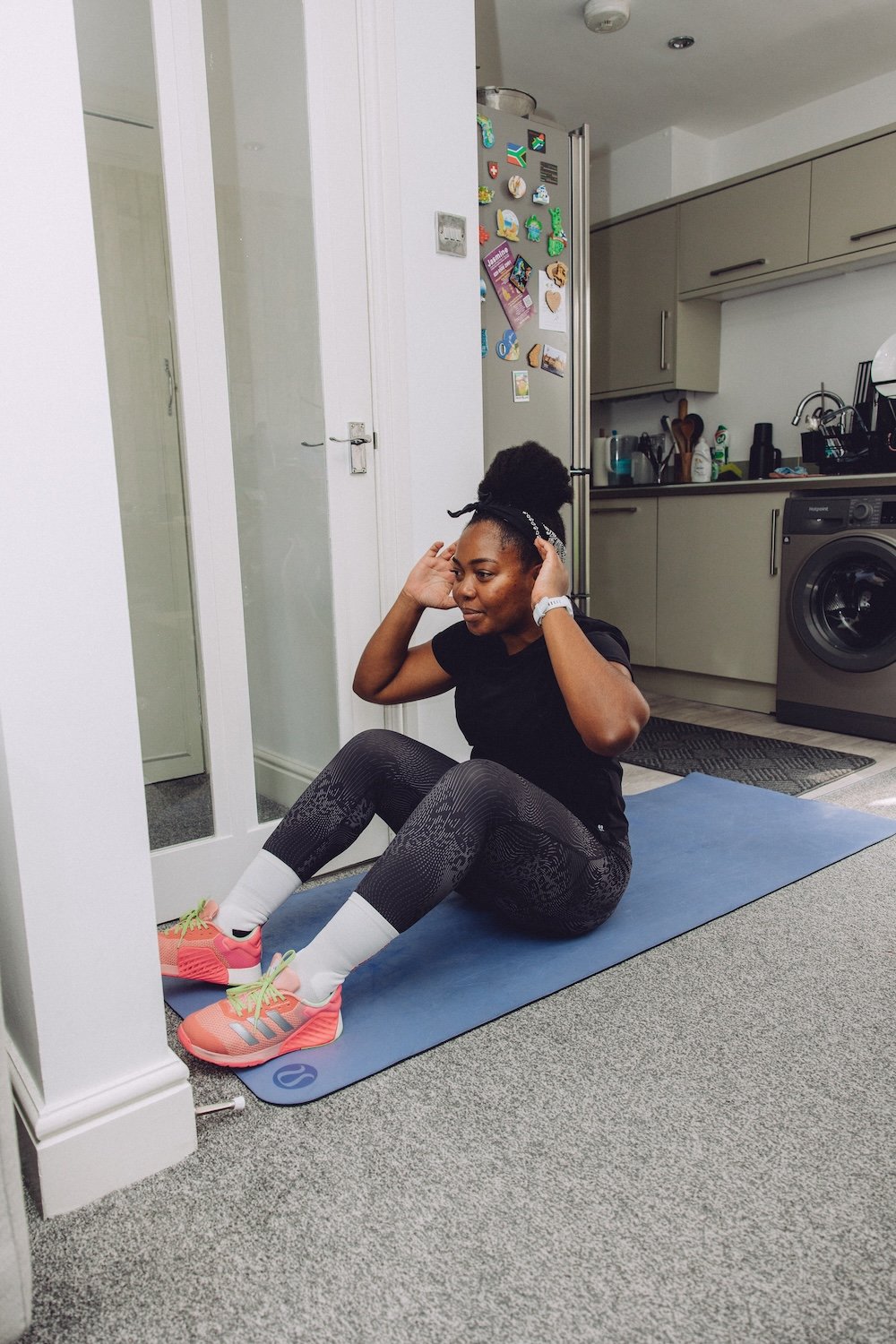
- 10 Sit Ups – Activate your core and hip flexors. Keep your upper back engaged as you lower down.
- 15 Bodyweight Squats – Work the muscles of your lower body and improve hip mobility. Keep feet shoulder-width apart and bend knees to a full squat depth that feels comfortable.
How To Do The Movements
Here’s a quick run down on how to do each of the movements.
Press Ups
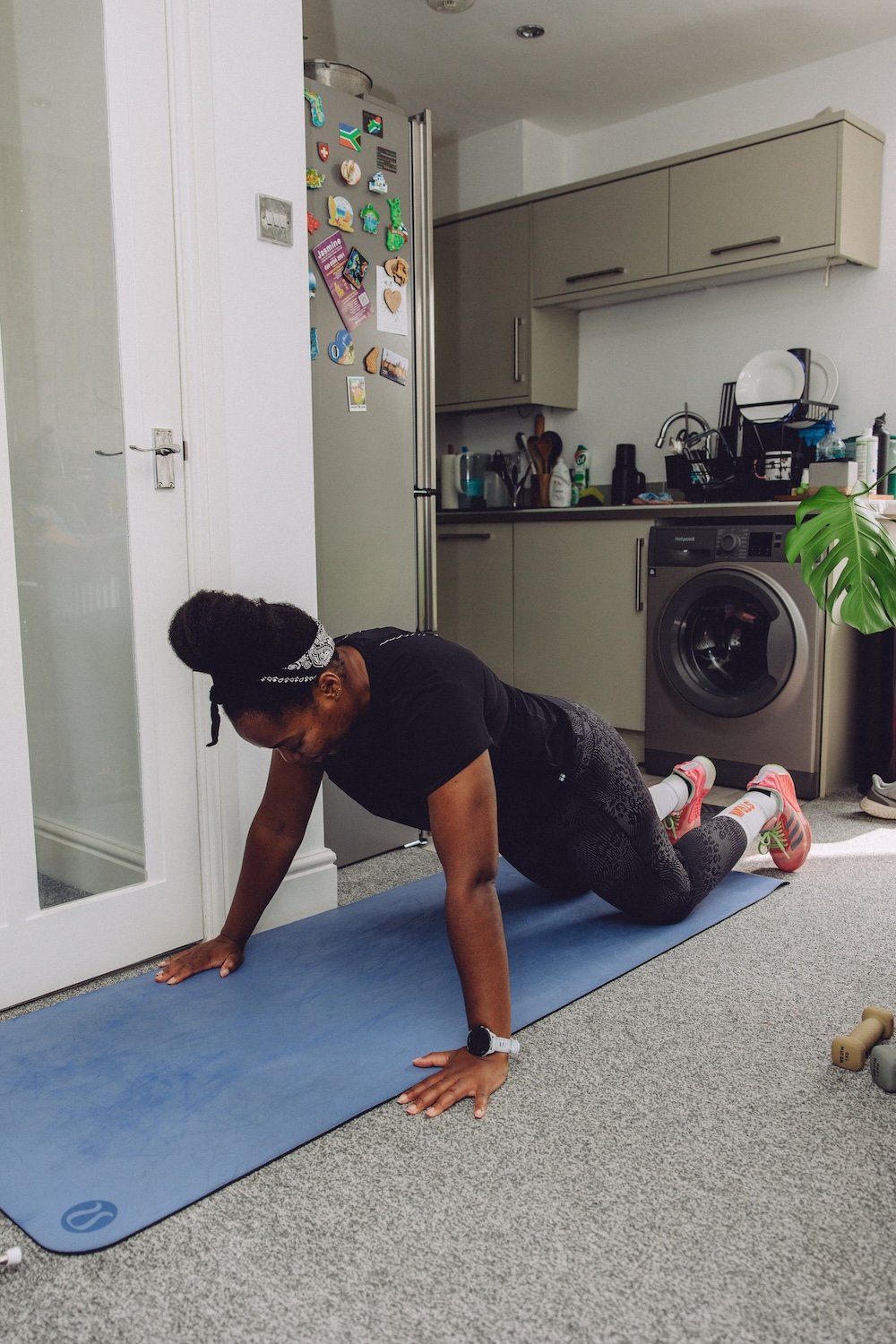
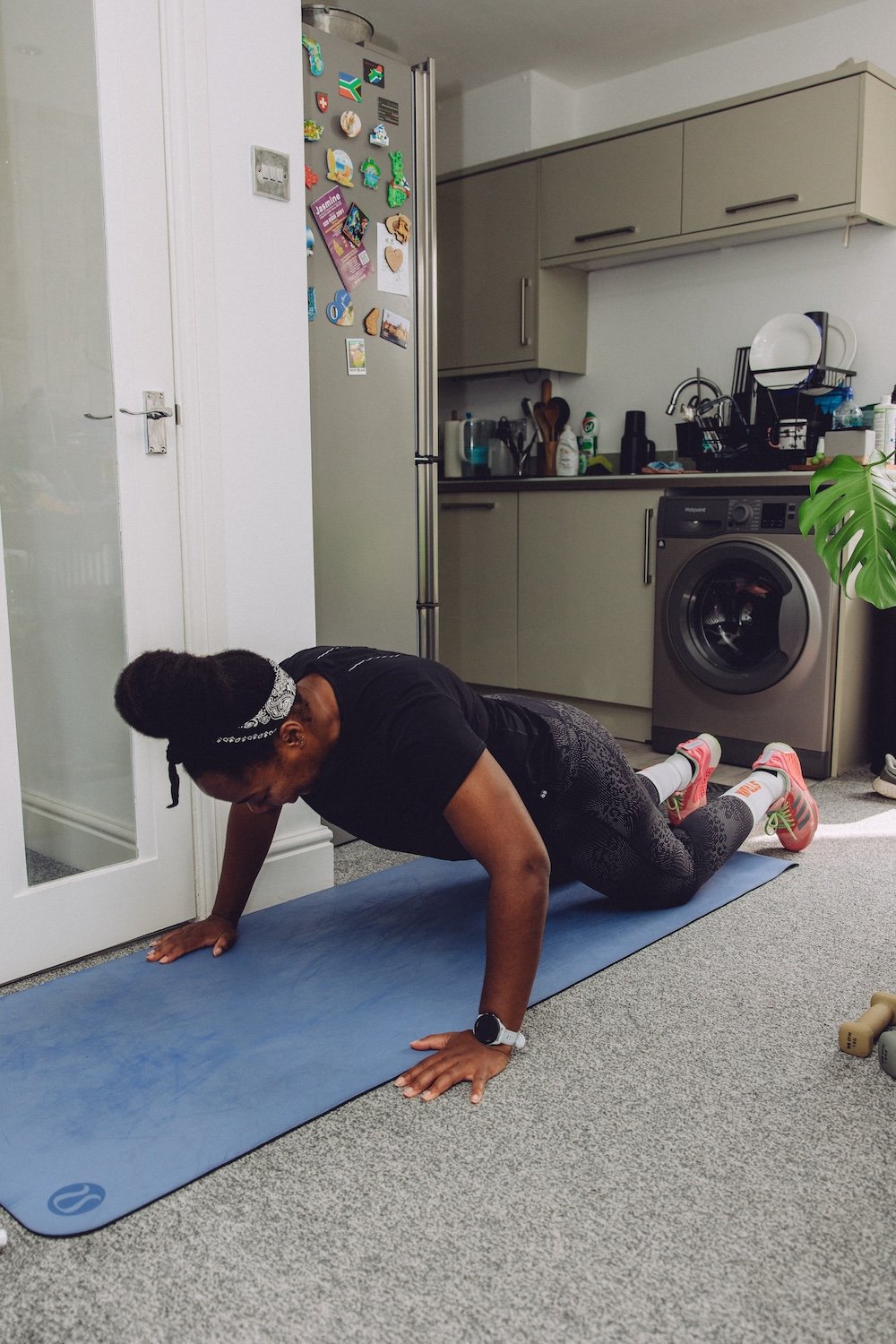
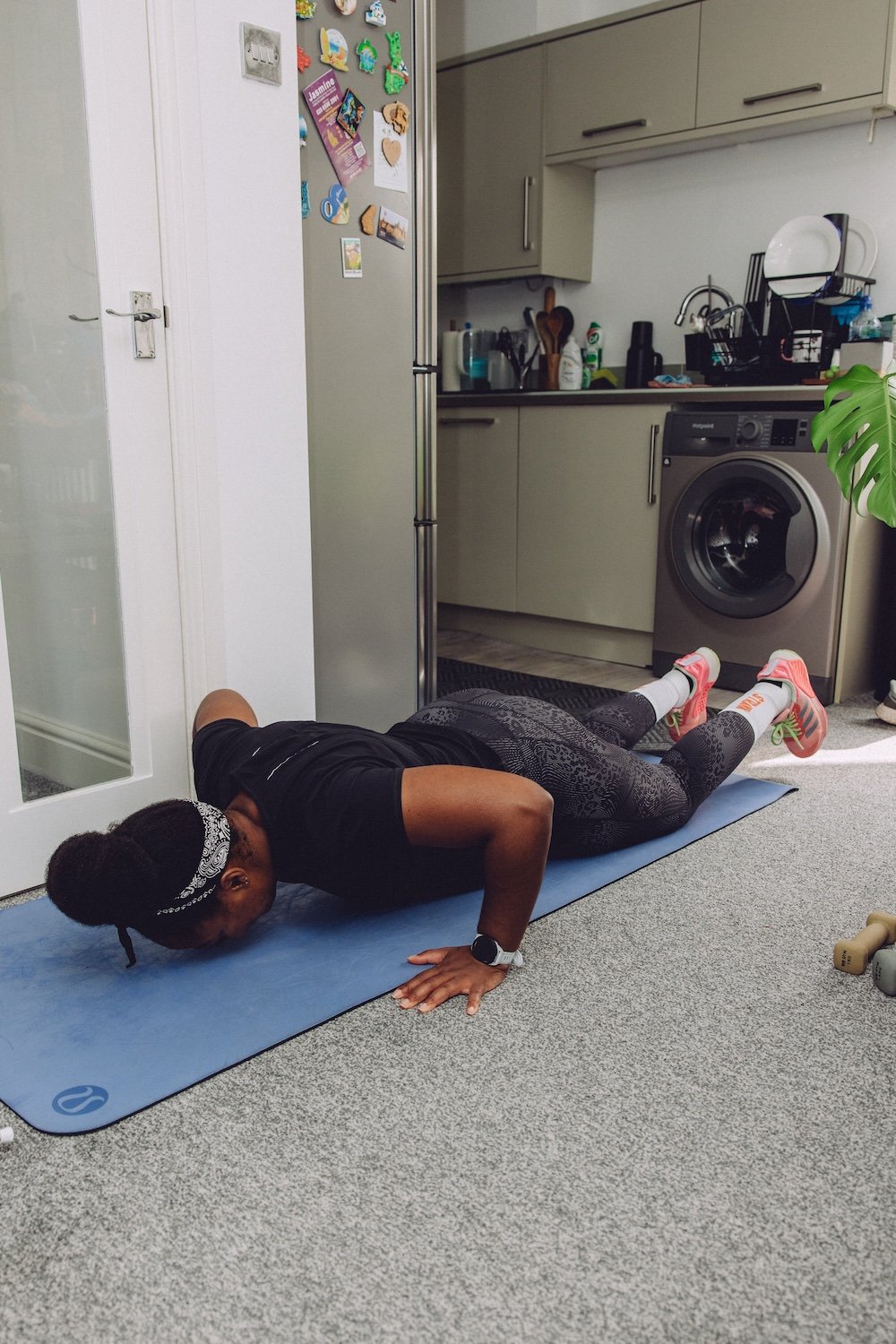
Start in a high plank with hands slightly wider than shoulder-width and your body in a straight line from head to heels. Bend your elbows to lower your chest towards the floor, keeping your core tight and elbows at about a 45° angle. Press back up through your palms to the start position.
Modification: Drop to your knees if needed, keeping your body in one line from knees to shoulders.
Sit Ups
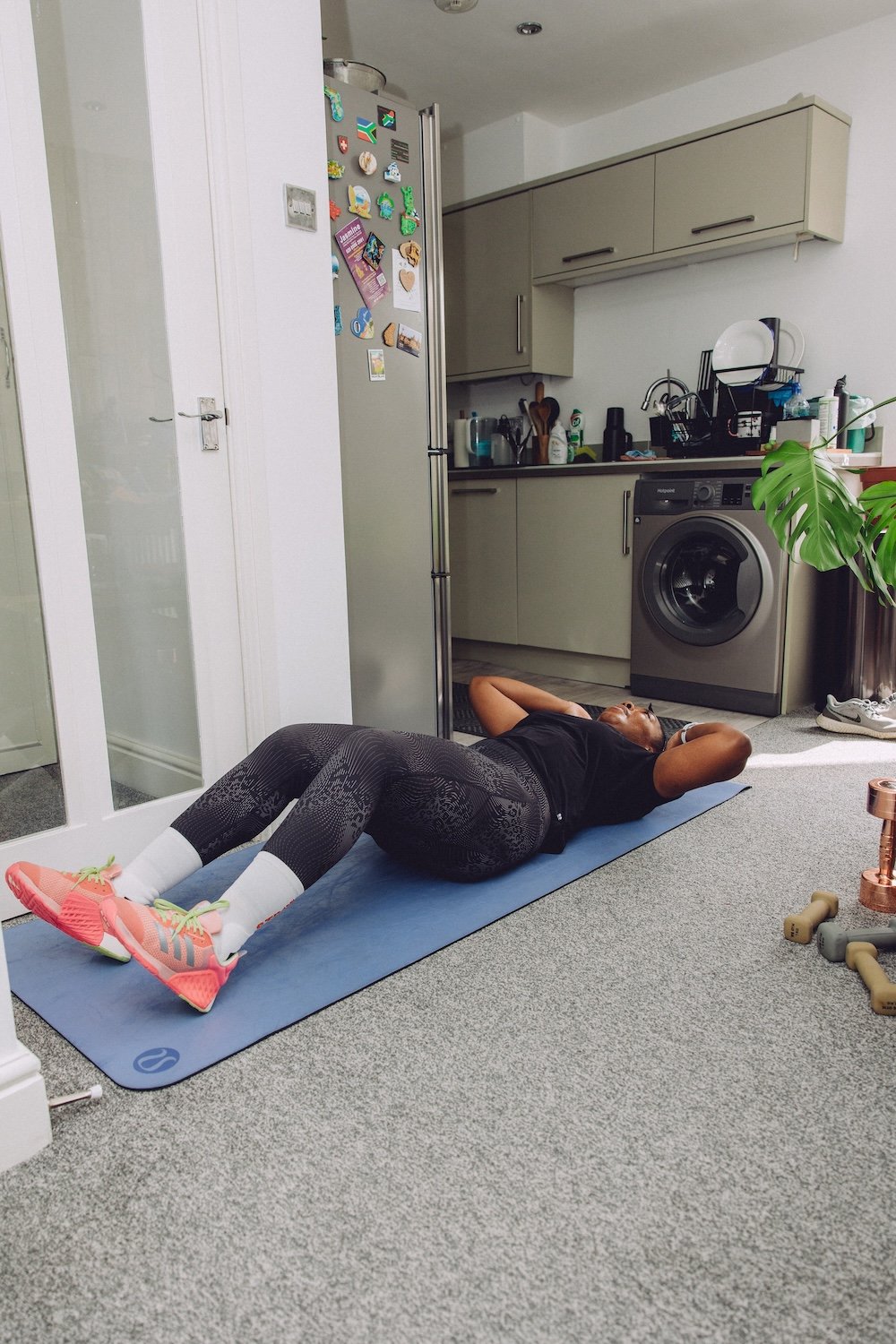
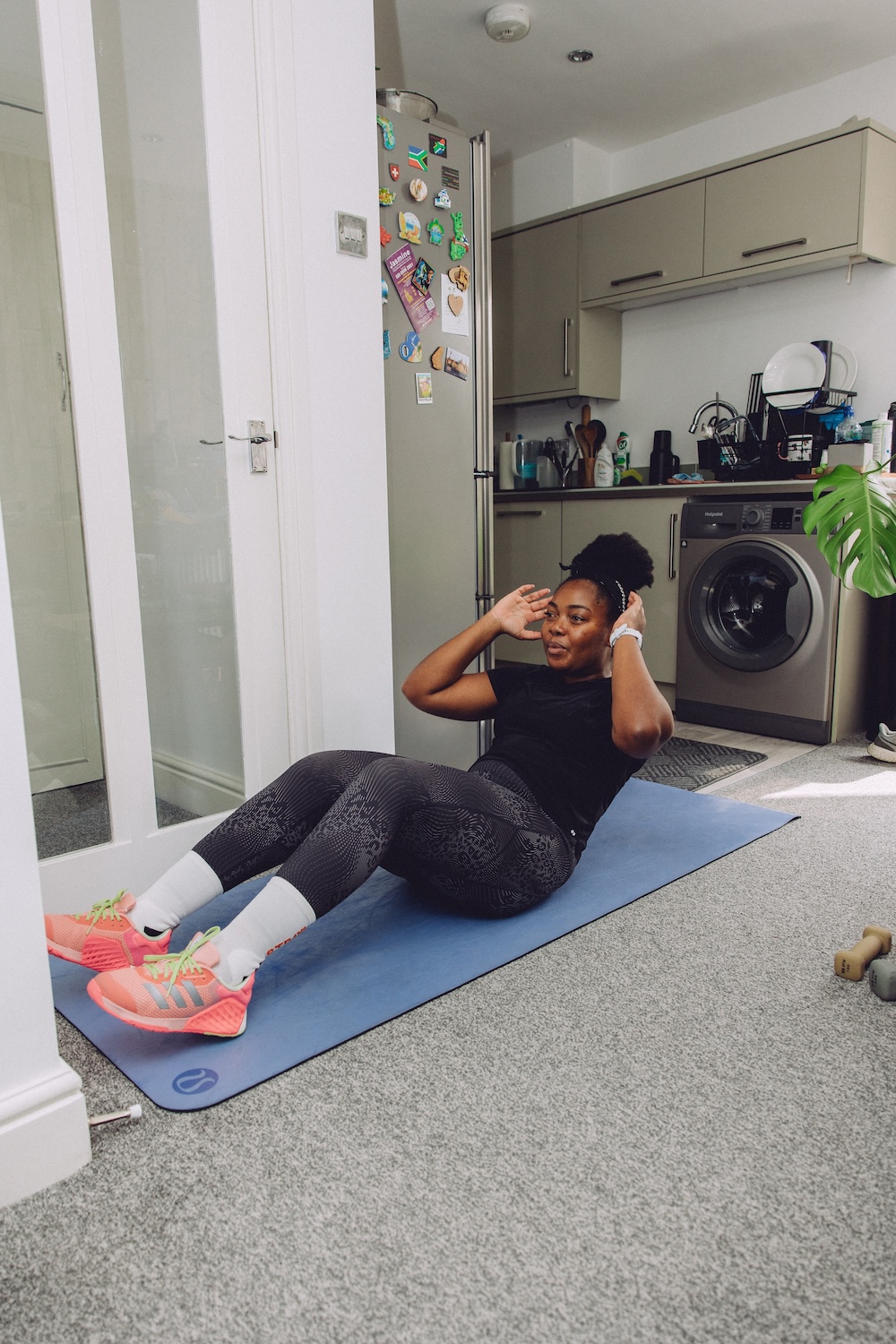
Lie on your back with knees bent, feet flat on the floor, and hands by your temples or across your chest. Engage your core to lift your upper body towards your knees, keeping your lower back grounded. Slowly lower yourself back down with control.
Tip: Avoid pulling on your neck — let your core do the work.
Bodyweight Squats
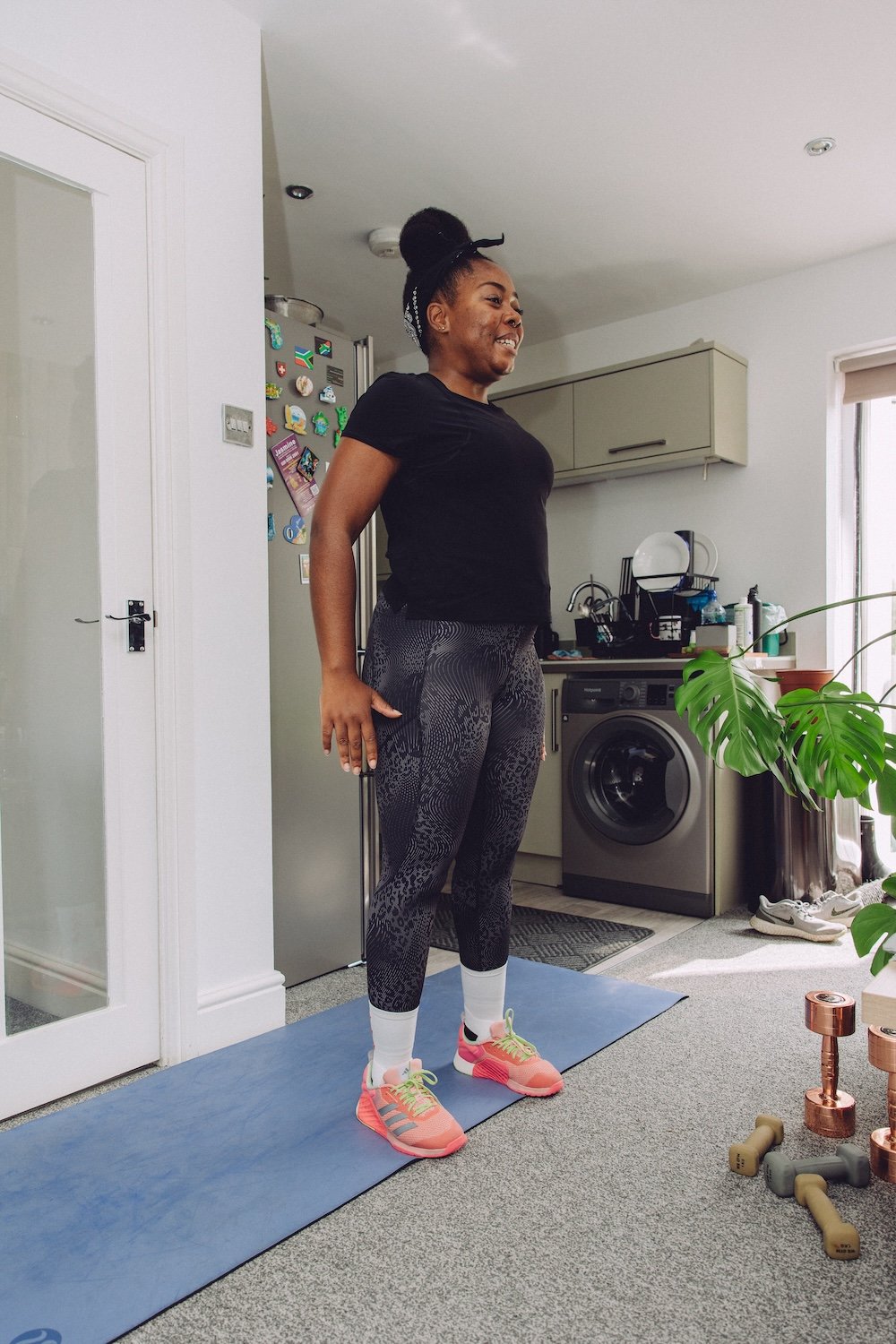
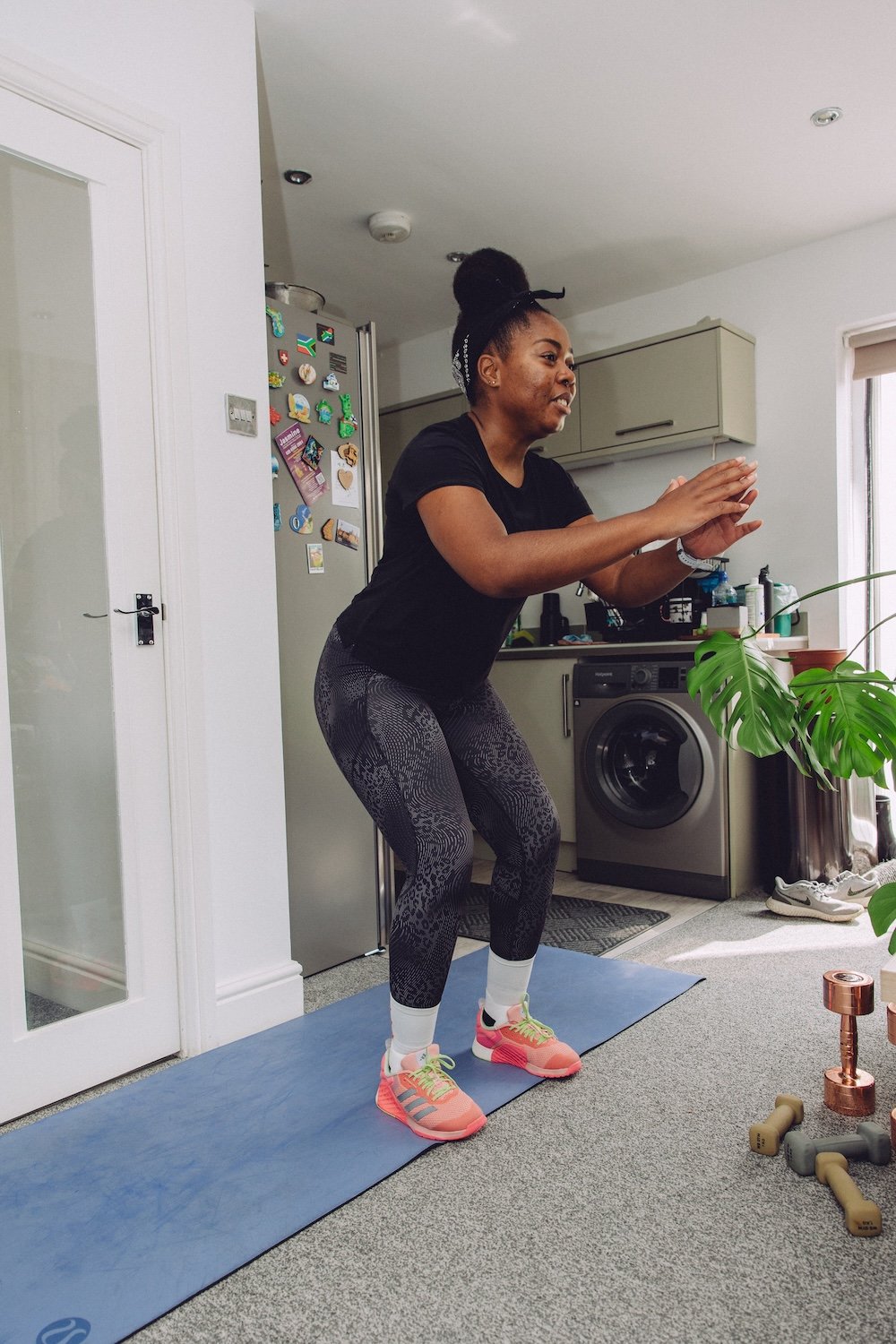
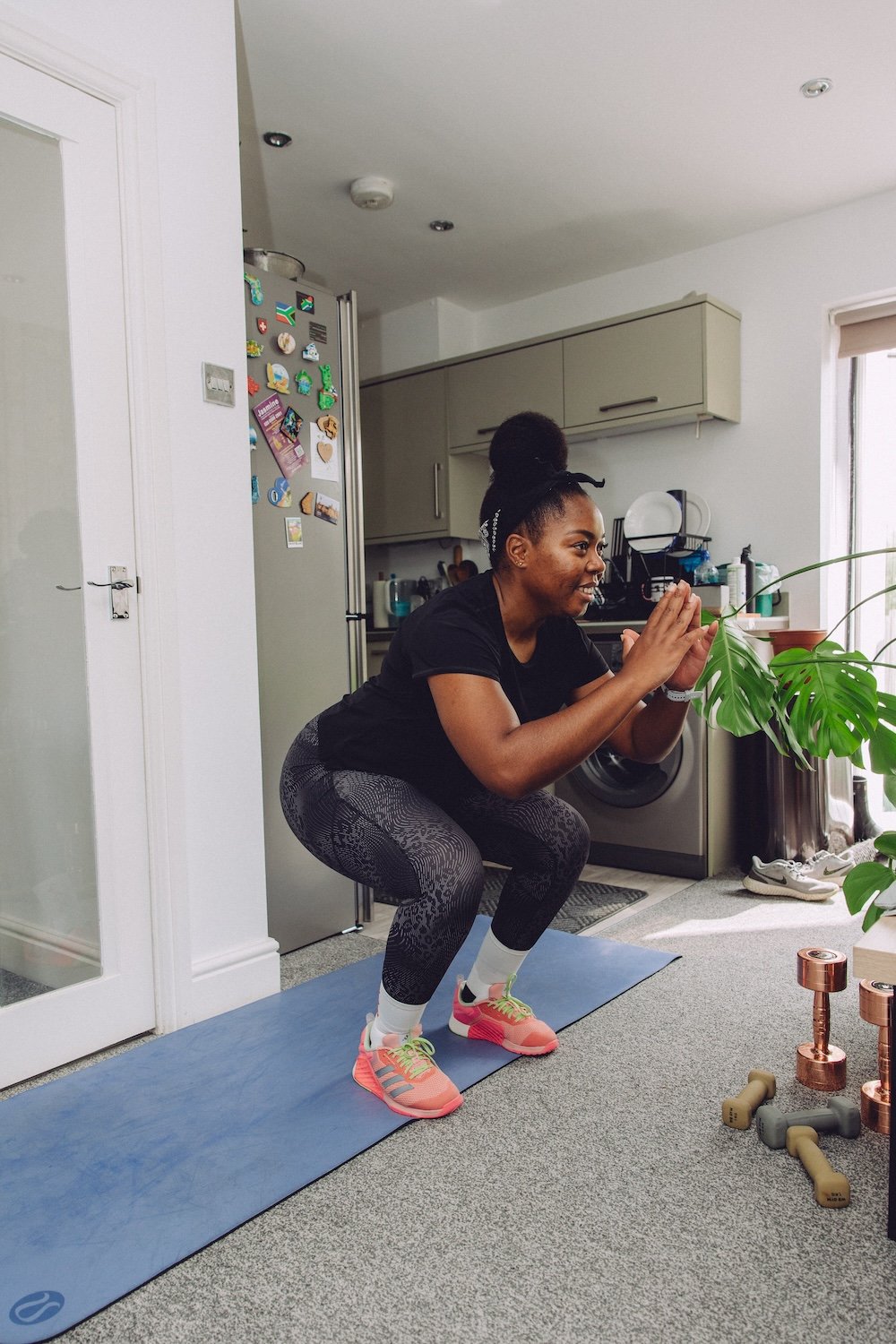
Stand tall with feet shoulder-width apart and toes slightly turned out. Bend your knees and push your hips back as if sitting into a chair, keeping your chest up and heels on the floor. Go as low as comfortable – ideally to a full squat – then press through your heels to stand tall again.
Focus on: Smooth movement, upright position, and even weight through both feet.
Progressions
- Round 2: Swap 5 of the squats for jump squats for a more intense movement.
- Round 3: If you’re up for it, make 10 of the squats jump squats. This increases the intensity of your workout and raises your body’s temperature.
This quick warm-up mimics real movement patterns, helps your blood vessels open up, and primes your muscles for strength training workouts or tough cardio sessions.
Squat Jumps
Start in your squat position. Lower down slightly, then explode upwards, jumping as high as you can while driving your arms overhead. Land softly with knees bent, absorbing the impact, and go straight into the next rep.
Optional Add-Ons
If you have a few extra minutes, here are some more general exercises you can add to move your entire body:
- Jumping Jacks – Raise your heart rate and get the whole body warm.
- Arm Swings & Shoulder Rolls – Great for shoulder mobility and upper-body activation.
- High Knees or Brisk Walking – Ideal for easing into higher intensity workouts at a slow pace.
These moves are simple but effective; a good idea if you’re prepping for a tough workout or want to improve injury prevention.
If you want some guidance on what to do once you’re warm, my online classes are a great way to jump straight into a structured workout without overthinking it.
Don’t Forget to Cool Down
Once your main workout is complete, don’t skip the cool down. Move at a slower pace to bring your heart rate down, then add some static stretches for your hip flexors, thoracic spine, and back muscles.
A proper cool down helps your cardiovascular system recover and reduces post-workout stiffness — especially after heavier loads or a high-intensity session.
A proper warm-up routine is literally the bridge between your desk and your next workout. It raises your body temperature, prepares your joints, and sharpens your focus.
So next time you’re about to start a home workout, take five minutes for this simple full-body warm-up. Your left leg, right hand, and every muscle in between will thank you when it’s time for the main workout.
Elle
p.s Safety always comes first. If you are new to exercise ensure you seek advice from your GP. Make sure you drink plenty of fluids, wear appropriate clothing and carry out drills in a suitable space. Technique is paramount, and nothing should hurt. Should you experience pain, discomfort, nausea, dizziness, chest pain, shortness of breath etc, STOP and consult your GP.